Trending

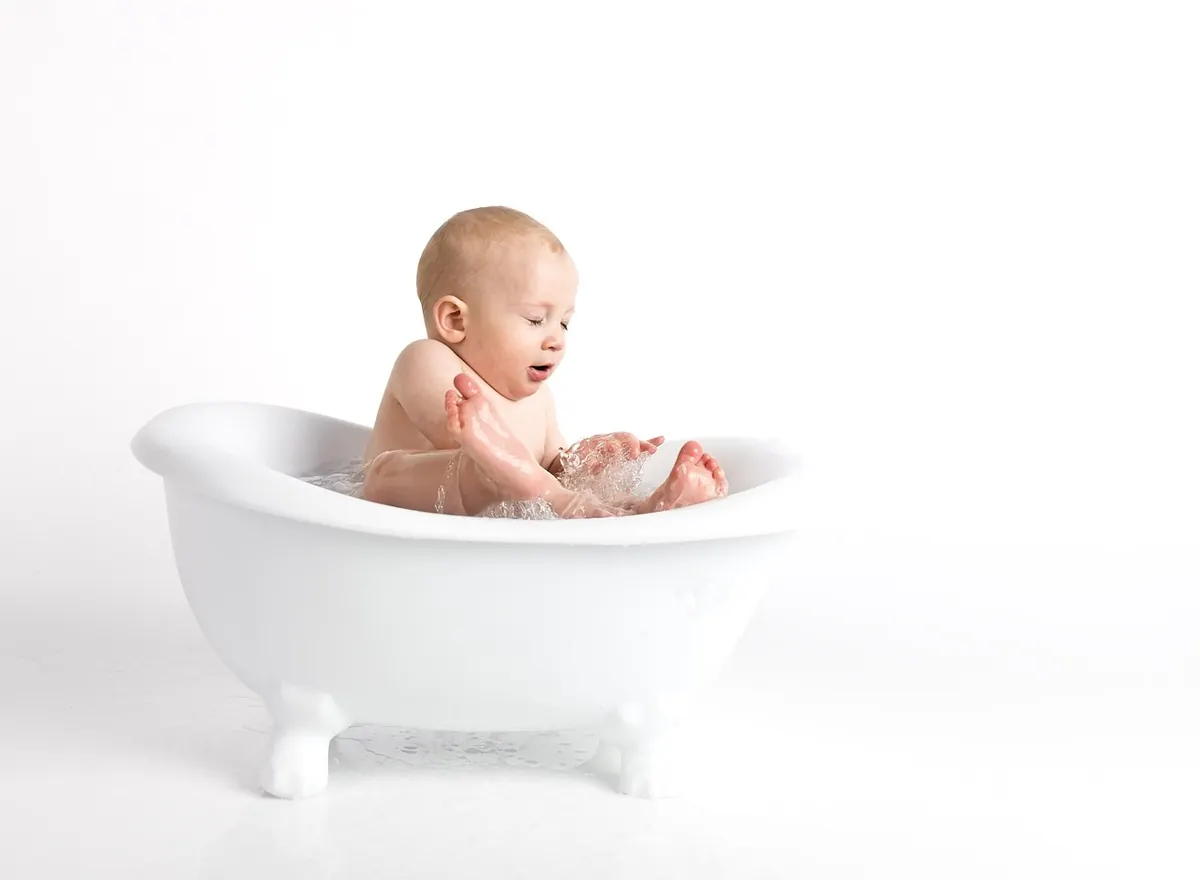
Nothing quite prepares you for how slippery a wet newborn is. They're small, they don't hold on, and the moment your hands get soapy, everything you knew about holding a baby seems to leave the room. If bath time makes you nervous, that's normal — and it's fixable. Most of the confidence comes from the prep work you do before the water ever runs.
One thing worth knowing up front: newborns don't need a bath every day. Two or three times a week is plenty for most, with a warm washcloth over the face, neck folds and diaper area in between. Fewer baths means more practice at a pace you can handle.
The biggest cause of bath-time panic is realizing mid-bath that the towel is in the other room. Gather everything first and keep it within arm's reach of the tub.
Warm the room first — around 75°F (24°C) feels comfortable for a naked baby, and newborns lose heat fast. Fill the tub with just two or three inches of water at roughly 100°F (about 38°C). Testing with your wrist or elbow, the water should feel neutral rather than warm. Swirl it with your hand to check for hot patches.
Support the head and neck with one hand, your forearm running along the baby's back so their body rests on your arm and their head stays above the waterline. Your other hand stays free to wash. This is sometimes called the football hold, and it works because your forearm carries the weight instead of your fingers.
If you'd rather cradle them, rest the head in the crook of your elbow with your hand under their bottom. Either way: head higher than body, head never underwater, one hand on them at all times. Drape a damp washcloth over their chest — it keeps them warm and gives you a little more grip than bare wet skin.
Keep the whole thing to five or ten minutes. Longer than that and they get cold, and a cold newborn is a crying newborn.
Have the hooded towel open and waiting on a flat surface before you lift them out. Pat dry rather than rub, and be thorough in the folds — neck, armpits, groin, behind the knees. Newborn skin doesn't need lotion or oil unless a clinician has recommended it. Get the diaper and clothes on quickly; the towel can only do so much.
Many parents sponge-bathe until the umbilical cord stump has dried and fallen off, and follow specific instructions after a circumcision. Ask your baby's clinician what they want you to do in your situation rather than following whatever you read online — including this. Skip the tub during an eczema flare or any unexplained rash, and check with a doctor about what's safe for your baby's skin.
The first bath is awkward. The second is slightly less so. By the fourth, you'll be doing it without thinking about your hands. Until then, keep it simple: short bath, warm room, everything within reach, one hand on the baby at all times.
If you're still nervous, do a sponge bath instead. A warm, damp washcloth and a towel on the floor works just as well for a newborn and lets you keep both hands steady. And if someone else is home, have them stand beside you for the first few baths — handing you things, taking the baby when you lift them out. Two sets of hands make the whole thing feel far less like a test.
Photo: henleydesignstudio / Pixabay